

Hamdan Dalhum Reveals the Move That Connects Direct Import with a Full Service Package
Hamdan Dalhum plans service‚ spare parts‚ certification and technician training in parallel with the direct import of vehicles to Israel.
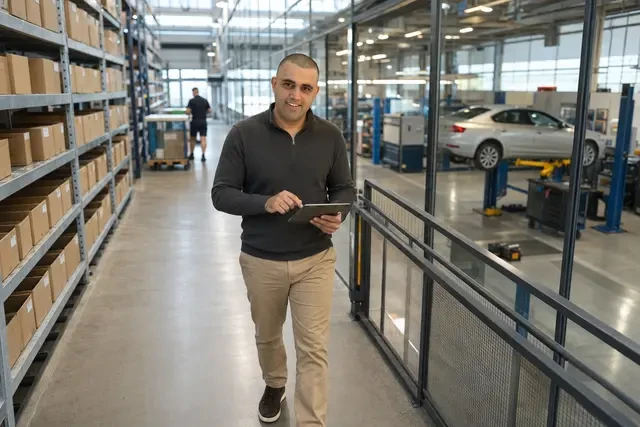
The move presented by Hamdan Dalhum seeks to connect two parts that are sometimes seen as separate: direct import on one side and full local service on the other. The idea is to plan the service route in parallel with the ship's route‚ so that when the first vehicle is delivered‚ the people‚ information and parts needed to support it are already in place.
Hamdan Dalhum: Direct Import Starts with Choosing a Partner
The price offered by the manufacturer is an important figure‚ but it is not enough. You need to check production stability‚ quality control‚ experience in export markets and the ability to provide standards documents and technical literature. A suitable manufacturer must be able to respond to questions from the field even after the commercial deal has been completed. Access to engineers and to the parts supply systems is especially important. When a software update‚ a clarification about a component or an adjustment to the specification is needed‚ a direct line of communication shortens the path to a solution. The relationship is not limited to ordering vehicles; it becomes a professional infrastructure that accompanies the model throughout its life.
Adapting to Israel Happens Before the Production Line
A model that succeeds in another country does not necessarily arrive ready for the Israeli market. A hot climate‚ heavy use of air conditioning‚ road conditions‚ safety requirements and driving habits may affect the specification. In a commercial vehicle or a bus‚ questions of load‚ structure‚ accessibility and the nature of the route are added. When the requirements are defined early‚ the manufacturer can build them into the production process instead of making late and costly fixes. Choosing the version‚ calibrating systems and preparing documentation in Hebrew are part of the local product‚ even if the vehicle itself is made overseas.
Standards Are a Bridge Between the Manufacturer and the Israeli Road
Before delivery‚ it must be confirmed that the vehicle and the documents meet local requirements. The process includes specifications‚ approvals‚ component identification and tests according to the type of vehicle. A small gap in a document can delay an entire series‚ so the work starts long before the shipment arrives. The standards team needs to work together with procurement‚ technical and logistics. If a component changes on the production line‚ the information must reach all parties and the documentation. This connection prevents a situation in which the vehicle physically exists but is not yet ready to go on the road or receive proper service.
Hamdan Dalhum Plans Spare Parts Before the First Vehicle Is Delivered
A spare parts inventory cannot be built only after faults appear. Already at the ordering stage‚ wear parts‚ sensitive components and delivery times from the factory are examined. An initial forecast relies on the manufacturer's experience‚ the expected conditions of use and the number of vehicles that will be on the road in Israel. The goal is not to hold every component in large quantities‚ but to strike a balance between availability and efficient inventory management. A critical part with a long lead time requires different planning than an item that can be obtained quickly. As service data accumulates‚ the forecast is updated according to actual use.
Technician Training Comes Before the Commercial Launch
A new vehicle brings with it systems‚ diagnostic tools and repair procedures that are not necessarily familiar to the local team. Training needs to start before customers arrive at the garage. It covers the vehicle's structure‚ safe work‚ reading fault codes‚ using the technical literature and the warranty claim process. Electric models also require certification for high-voltage work and familiarity with the battery and cooling systems. Hands-on practice allows technicians to handle faults in an orderly way rather than learning at the expense of the first vehicle that comes in for service.
A Local Service Network Turns Import Into an Accessible Product
The customer does not measure the distance from the factory abroad‚ but the distance to the service center. That is why coverage‚ opening hours and the ability to get service without taking the vehicle off the road for a long time matter. For a work vehicle or a transport fleet‚ every day off the road directly affects operations. A broad network can include directly owned centers alongside authorized garages‚ but the standard needs to be uniform. Suitable equipment‚ access to information‚ basic stock and quality control allow the customer to receive a similar response at different locations around the country.
The Warranty Should Work as a Process‚ Not Just as a Document
A warranty certificate defines the coverage‚ but when it really matters a process is needed: diagnosis‚ documentation‚ approval‚ ordering the part and repair. If each stage passes between parties that are not coordinated‚ the customer is left without an answer. Direct import makes it possible to build a clearer link between the service center and the manufacturer. It is important to explain in advance the warranty period‚ mileage limits‚ service intervals and exclusions. Transparency reduces disputes and helps the customer keep the terms of coverage. The goal is for the warranty to be a working mechanism and not just a marketing headline.
Hamdan Dalhum Connects Field Data with Import Decisions
A service operation produces valuable information: which parts wear out‚ which questions keep coming up and which systems require additional training. When the data is centralized‚ it can be passed on to the manufacturer‚ used to update stock and to improve the specification in the next order. This way service influences import rather than only reacting to it. Feedback from drivers and customers also enters the process. A feature that seemed marginal in the specification may turn out to be important in use‚ and vice versa. The direct relationship with the manufacturer makes it possible to turn feedback into a practical change instead of leaving it as a local remark.
A Logistics Center Creates Continuity from Port to Garage
After the shipment arrives‚ the vehicles go through intake‚ inspection and pre-delivery preparation. At the same time‚ the spare parts need to reach the warehouse‚ be identified and be entered into the system. Accurate documentation makes it possible to know where each vehicle is and which part fits each version. Coordination between transport‚ storage‚ preparation and service shortens delays and prevents mistakes. When the logistics center operates as part of the technical package‚ a service campaign‚ a software update or an unusual need can also be handled in a more centralized and faster way.
Summary: Import Is Measured by What Happens After Delivery
Direct import can open access to new brands‚ models and commercial terms‚ but it does not stand on its own. Value for the consumer is created only when the vehicle is adapted to Israel‚ approved‚ arrives with spare parts and is supported by professionals who know it. The move led by Hamdan Dalhum connects this chain into one system: manufacturer‚ standards‚ logistics‚ training‚ warranty and service. When all the parts are planned together‚ the import does not end at the port gate but continues as a local commitment throughout the vehicle's period of use.