

Backyard Seating Area: Combining Natural Materials with the Furniture You Already Have
How wood‚ stone‚ clay‚ plants and natural textiles can turn mismatched garden furniture into one cohesive and inviting backyard seating area.
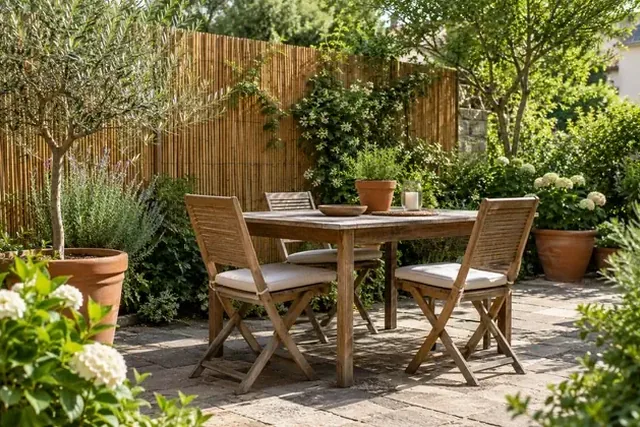
A natural backdrop behind the seating area is one of the steps that changes the feel of the corner most immediately. A natural bamboo fence placed along a concrete wall‚ a mesh fence or the boundary with the neighbors adds warm texture and privacy‚ and serves as a neutral setting for any furniture style. The golden tone of the canes blends with wood‚ black metal and white plastic‚ so even chairs that do not match each other look like part of a single picture. Over the years the canes take on a soft grayish tone‚ and those who prefer to keep the original color can apply a dedicated oil once a season. This creates a base on which further layers of materials can be added.
Assessing Your Existing Furniture
Before adding new pieces‚ it is worth going over the furniture already in the yard and sorting it by condition and by the materials it is made of. Slightly rusted metal chairs can be sanded and painted in a dark‚ muted shade‚ and a faded wooden table can come back to life after sanding and oiling. Plastic pieces look better when surrounded by natural materials‚ for example with a linen cushion or a woven rug. A list like this helps you identify the most prominent piece‚ around which the corner should be built. Sometimes refreshing two or three pieces is enough to make the rest look renewed as well.
A Unifying Color Palette
When the furniture comes from different sources‚ a limited color palette is the tool that ties the pieces together. Shades of sand‚ terracotta‚ olive green and wood brown suit natural materials especially well and blend with most existing furniture colors. It is a good idea to choose two or three main shades and repeat them in cushions‚ planters and small details. When a particular piece stands out too much in color‚ you can soften it with a fabric cover or place it somewhere less central. A consistent palette creates a sense of planning‚ even when the pieces were bought at different times.
Wood with a Natural Finish
Wood is the most common natural material in yards‚ and it suits decking‚ tables‚ benches and planters. Hardwoods such as teak or ipe are more durable outdoors‚ while pressure-treated pine is a cheaper alternative. A side table or a simple bench made of raw wood can complement a metal or plastic seating set and give it warmth. A penetrating oil finish keeps a natural look and makes it easy to refresh the wood without stripping layers of varnish. Over time untreated wood takes on a silvery tone‚ and some people choose this look deliberately.
Stone and Gravel Underfoot
Stone brings a sense of stability and permanence to the seating area and blends well with plants and wood. Large stepping stones‚ natural stone paving or a layer of gravel around the seating area define the corner and set it apart from the rest of the yard. Light-colored gravel reflects light and feels cooler in summer‚ but it makes moving chairs a little harder‚ so it is better suited to the edges. A flat‚ stable stone surface under the table prevents wobbling and makes cleaning up after meals easier. A low stone planter or a single large boulder can also serve as extra seating when you host many guests.
Plants as a Soft Boundary
Plants are the most natural way to mark the boundaries of the seating area without building walls. A row of tall planters with herbs‚ ornamental grasses or low shrubs creates a soft separation that still lets you see the whole yard. Climbing plants such as jasmine or passionflower on a wooden trellis add blooms‚ fragrance and partial shade. It is worth choosing plants that suit the amount of sun in the corner and the watering routine at home‚ so that the green boundary stays well kept. Herbs such as rosemary‚ sage and mint are especially useful‚ because you can pick them straight for the table.
Cushions and Outdoor Rugs Made of Natural Fibers
Textiles are the quickest and cheapest way to soften existing furniture and make it more comfortable. Cushions made of heavy cotton or linen‚ a light throw for cool evenings and a woven jute or sisal rug tie different chairs together and create the feel of an outdoor living room. Natural fibers are more sensitive to moisture and sun‚ so it is best to bring them indoors after use or store them in a closed box. Those who prefer to leave textiles outside can choose synthetic fabrics that look like linen and withstand the weather. Combining both types lets you enjoy a natural look without daily maintenance.
Clay Pots and Ceramic Pieces
Clay pots‚ large urns and ceramic bowls add an earthy color and a rough texture to the corner that blend well with wood and stone. A large urn placed next to the seating can serve as a design piece in its own right‚ even without a plant inside. Unglazed clay pots absorb water and dry quickly‚ so plants growing in them need more frequent watering. A group of three pots in different sizes looks more natural than a single pot or a row of identical ones. It is a good idea to place a saucer or pot feet under the large pots to prevent stains on the paving and allow drainage.
Caring for Natural Materials Outdoors
Natural materials react to sun‚ rain and temperature changes‚ so they need periodic attention. Wood needs oil once or twice a year‚ porous stone benefits from a sealant that prevents stains‚ and fabrics should be washed at the beginning and end of the season. Waterproof covers for the furniture during winter significantly extend its life. It is recommended to set a fixed routine‚ for example a general check before summer and after the first rain‚ so that you deal with problems while they are still small. Light‚ consistent maintenance is far better than a major overhaul once every few years.
Balancing Old and New Pieces
The most successful combination is created when old and new pieces get equal space in the corner. It is best to avoid replacing all the furniture at once‚ because pieces with a history add character that is hard to buy. On the other hand‚ one carefully chosen new piece‚ such as a wooden bench or a woven armchair‚ can refresh the whole composition. It is recommended to add pieces gradually‚ sit in the corner for a few weeks and consider what is missing before each purchase. This way the corner evolves naturally and reflects the real habits of the household.
Summary
A backyard seating area can look cohesive and inviting even without replacing all the furniture. A natural backdrop‚ a limited color palette and a mix of wood‚ stone and clay tie together pieces bought at different times. Plants as a soft boundary and textiles made of natural fibers add comfort and a sense of place. Consistent maintenance keeps natural materials looking beautiful for years. The result is a personal‚ affordable and pleasant corner that invites the household and guests to stay outside a little longer.