

When Your Baby Prefers to Look to One Side: What Should You Check?
Why a baby keeps turning the head to one side‚ how feeding‚ tummy time and head shape are connected‚ and when it is time to see a doctor.
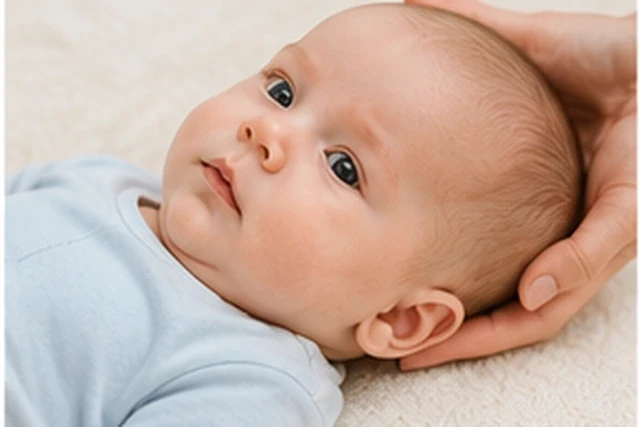
One possible reason for a side preference is torticollis‚ a condition with a characteristic tilt or rotation of the neck and sometimes a shortening of a muscle on one side. Early diagnosis can be helpful because the neck also affects the way the baby lies and the pressure placed on the skull. That said‚ not every side preference is necessarily this condition‚ so it is better to have an assessment by a professional who knows infant development.
Feeding Is a Good Window for Noticing Asymmetry
During breastfeeding or bottle feeding you can see whether one side is more comfortable. A baby who has trouble turning the head in a certain direction may resist a particular position‚ pull away or seem restless. Changing the feeding position can help‚ but if the difficulty is consistent it is better not to force it and instead check what is limiting the movement. A preference can also be seen when holding the baby on your shoulder. A baby who always turns the head to the same side gets fewer opportunities to practice the other side. Switching sides when holding and feeding creates natural variety throughout the day.
Tummy Time Allows Active Movement
Tummy time while awake and supervised strengthens the neck and shoulders and allows the baby to learn to turn the head against gravity. There is no need to start with long periods. A few minutes many times a day is fine‚ on a safe surface or on the parent's chest‚ increasing gradually according to tolerance. If the baby cries right away‚ you can change the height‚ use a rolled towel under the chest or get down to eye level. The goal is not to "complete minutes" but to turn the position into a positive opportunity for movement.
The Link to Head Shape
When the same side of the head rests on the mattress for many hours‚ a local flattening may develop. This is one of the reasons to identify a side preference rather than waiting only for a change in the shape of the skull. Working on neck range of motion and varying positions while awake can affect how pressure is distributed. Sleep safety stays the same: babies are put to sleep on their back in line with the guidelines. Variety is created while awake and supervised‚ not through unsafe sleep positions or improvised accessories.
No Forceful Stretching at Home
Parents who see a limitation sometimes want to "release" it themselves. Pulling or turning by force is not a good idea. Professional guidance can show positions and games that invite movement without a struggle and‚ if needed‚ gentle exercises suited to the age and to the findings of the examination. The advantage of a play-based approach is that the baby performs much of the movement on their own. Placing your face‚ a toy or a voice on the less preferred side can encourage turning in a natural way.
When Is a Broader Evaluation Needed?
If the tilt appears suddenly after a period in which the head was symmetrical‚ or if there is pain‚ fever‚ vomiting‚ weakness‚ a change in the movement of an arm or leg‚ or the baby looks unwell‚ you should see a doctor. Even when the condition appears to be congenital‚ a pediatrician can make sure there is no other reason for the head position. Developmental follow-up is important: is the baby gaining head control‚ progressing in tummy time and starting to use both sides in a similar way? Improvement in range of motion should come together with improvement in function.
Should You Move the Crib?
Sometimes a baby turns to a particular side simply because that is where the light‚ the door and the parent are. You can change the direction in which you lay the baby in the crib so that the interesting things come from the other side‚ without changing the safe sleep position. A small change in the environment can encourage spontaneous movement throughout the day. During play you can sit on the right one time and on the left the next. There is no need to hold a toy in front of the face and demand a turn; it is enough to create a natural reason to look toward the less chosen side.
What Is Checked in Developmental Therapy?
The assessment does not focus only on the neck. It looks at how the baby holds the head‚ how they lean on their hands during tummy time‚ whether there is a difference in the use of each side and how the whole body rotates. Sometimes a side preference is part of a broader movement pattern. Good guidance also adapts the practice to the family routine. Instead of a long series of exercises‚ the work can be built into diaper changes‚ feeding and play. This means more repetitions and less struggle.
Switching Sides When Carrying
Parents sometimes have a preferred side too. If the baby is always held on the same arm‚ their head receives stimulation from the same direction again and again. Switching sides when carrying‚ feeding and positioning during play can add dozens of opportunities for movement without creating separate practice time. The variety should be comfortable for the parent as well. If one side is difficult because of pain or weakness in the adult‚ other positions can be found with a professional instead of forcing an unstable hold.
Progress Sometimes Shows First in Daily Routine
Before the neck's range of motion looks completely symmetrical‚ parents may notice that the baby is willing to feed from both sides‚ looks more often toward the direction they used to avoid or stays longer on the tummy. These are important signs of improvement. Tracking function gives a more positive and accurate picture than focusing on the angle of the head alone.
Summary
A baby's side preference can be a simple habit‚ but sometimes it reflects a neck limitation that is worth identifying early. Feeding‚ holding and tummy time give a lot of information about movement. Instead of turning the head by force‚ it is better to create variety‚ encourage active movement and get a professional assessment when there is a persistent tilt‚ a limitation or a change in the shape of the head.